When you're planning a commercial flat roof renovation, you'll want to check how your current flat roof is holding up and figure out which replacement method makes the most sense. Whether you go with full removal and replacement or decide on an overlay, getting a proper assessment with thermal imaging and moisture detection is key to making sure everything performs well long-term, saves you energy, and stays safe.
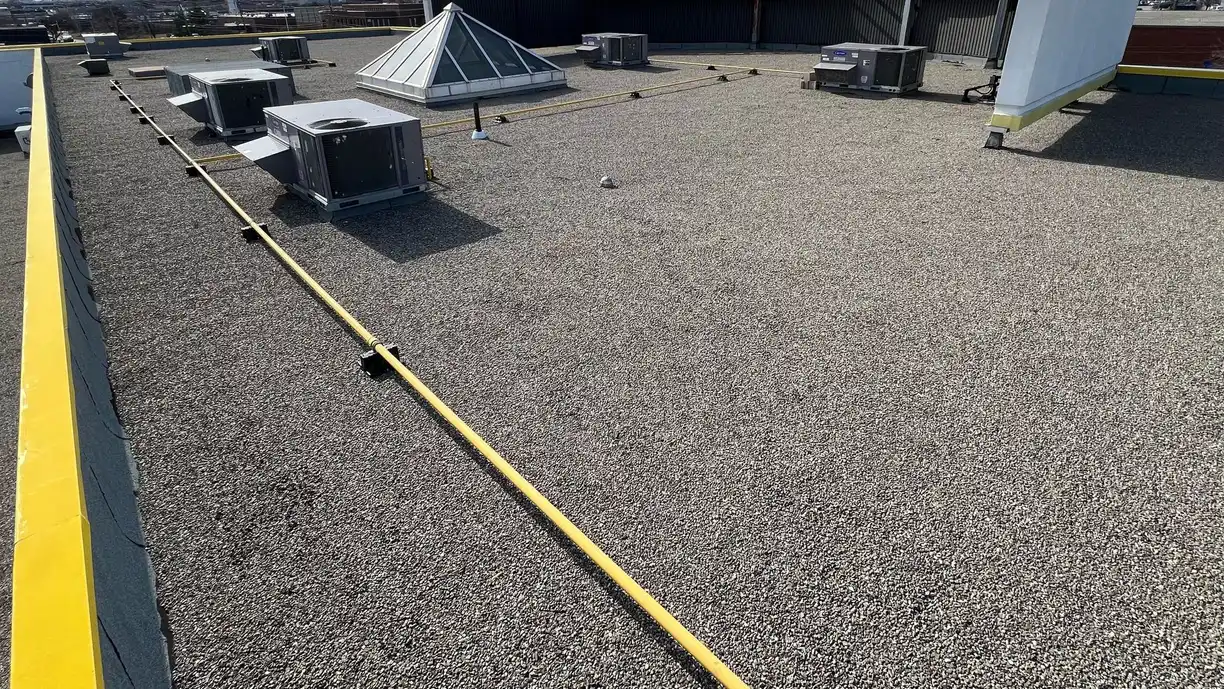
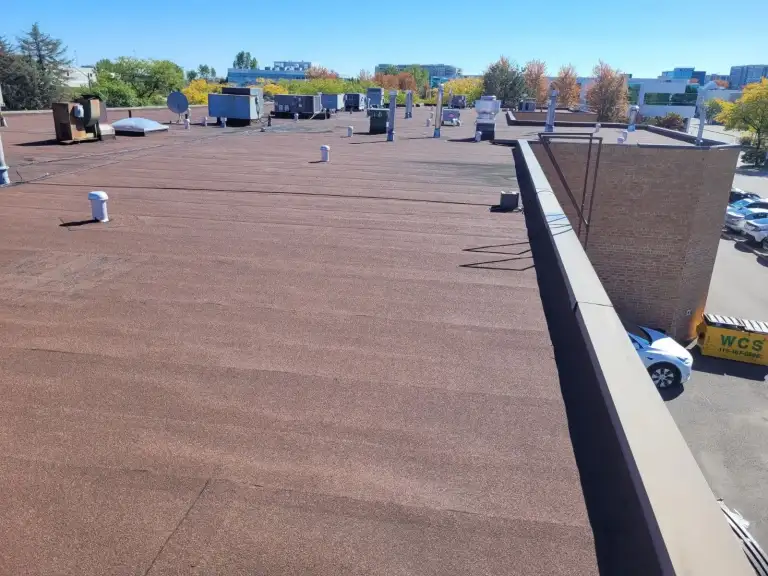
Based on what your building needs, different flat roofing materials might work best including Built-Up Roofing (BUR) systems with hot asphalt and gravel, PVC membranes, or cold-applied liquid systems.
Comprehensive commercial roofing replacement typically involves:
- Complete tear-off versus overlay–we'll weigh the pros and cons based on your roof's age, damage level, and what your warranty requires
- Deck inspection and structural repairs to get your roof foundation solid again
- Insulation upgrades to boost energy efficiency and bump up your building's R-value
- Installing waterproofing systems, vapour barriers and moisture control layers for protection that actually lasts
- Adding reflective roof coatings to cut down on heat buildup and help your system last longer
Following proper safety measures throughout the entire replacement process:
- Careful membrane installation using torch-on, mechanically fastened, or adhered methods – whatever works best for your situation
- Final cleanup and flashing work to make sure your entire system is watertight and built to last